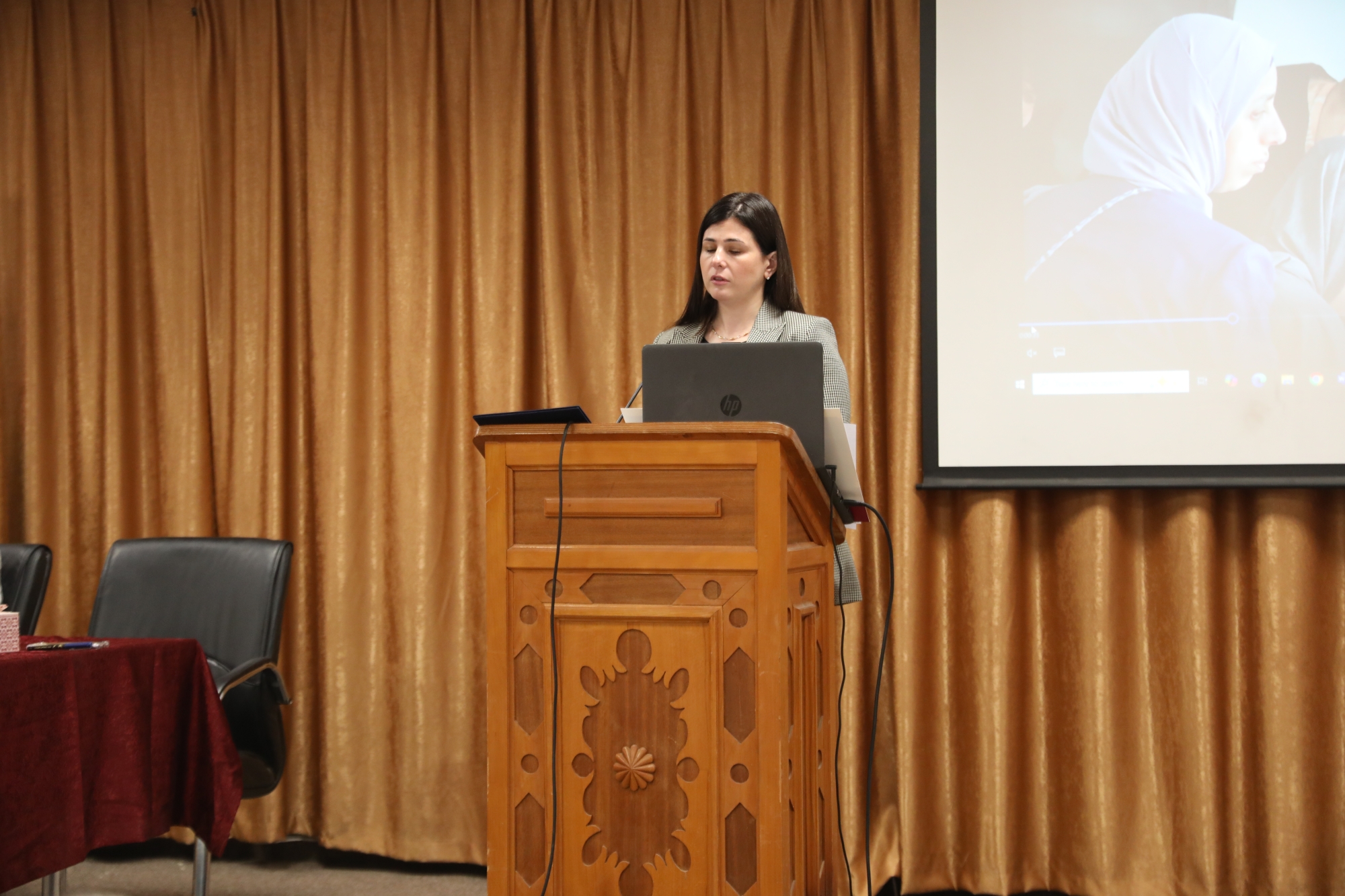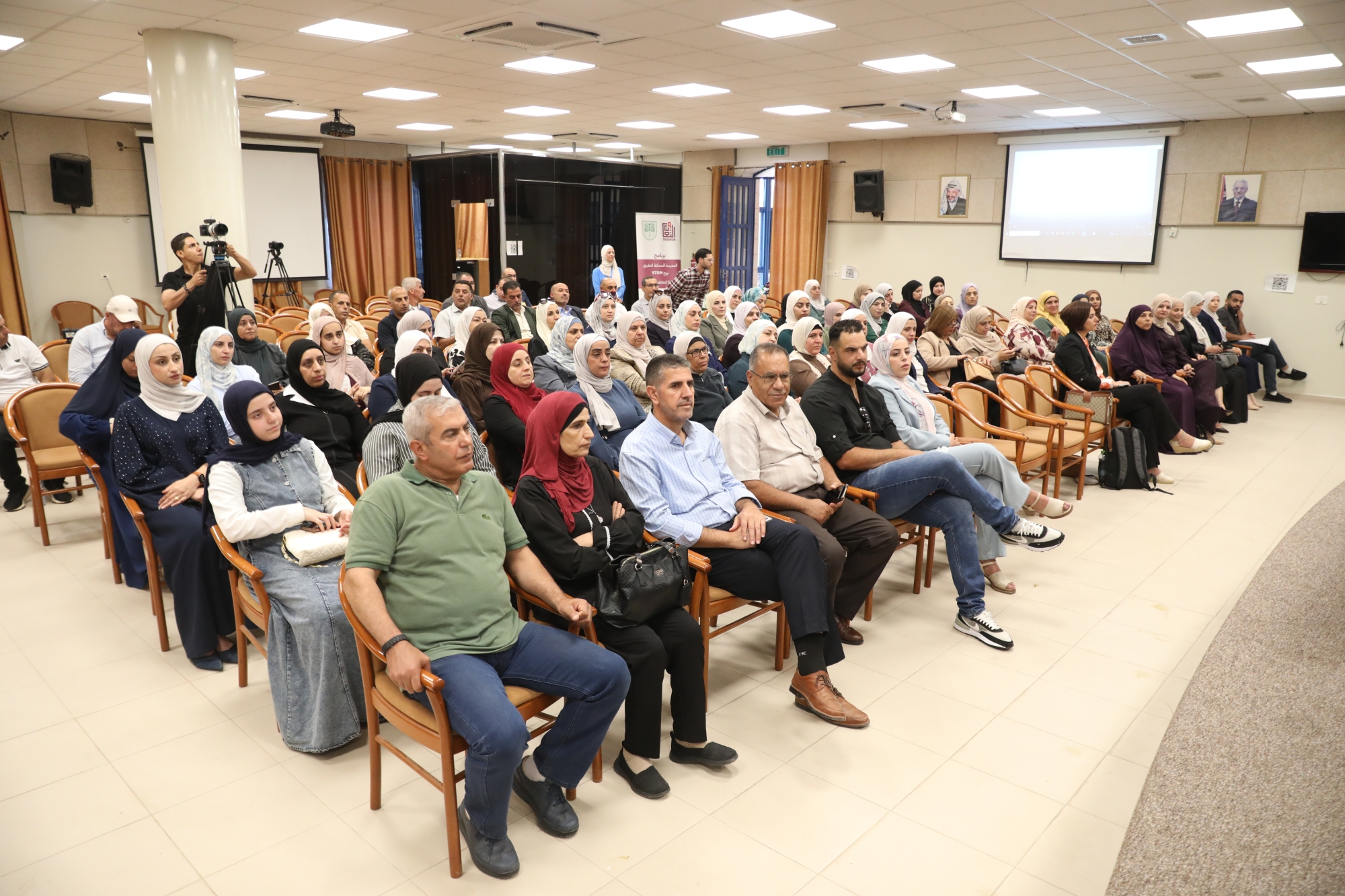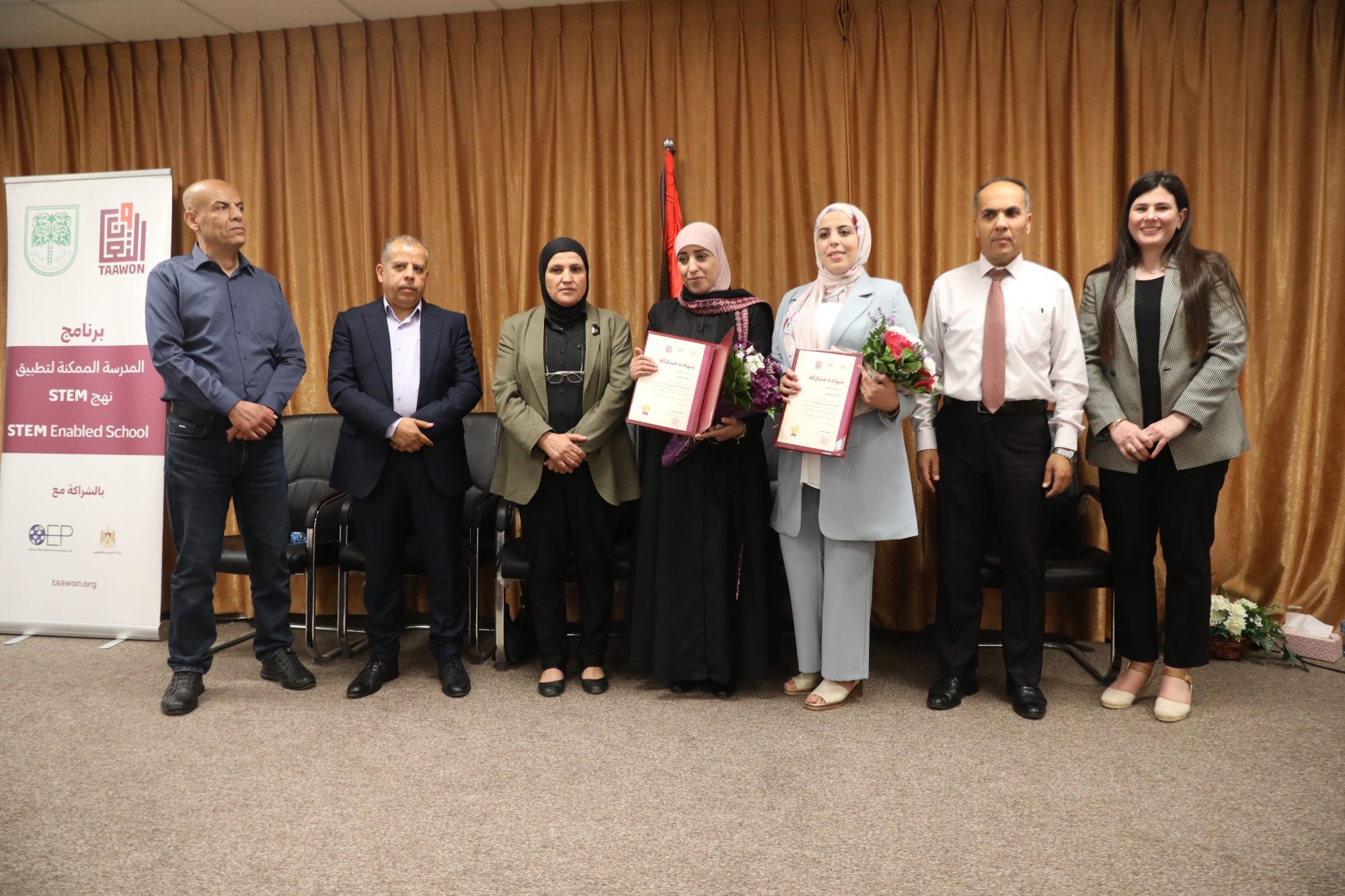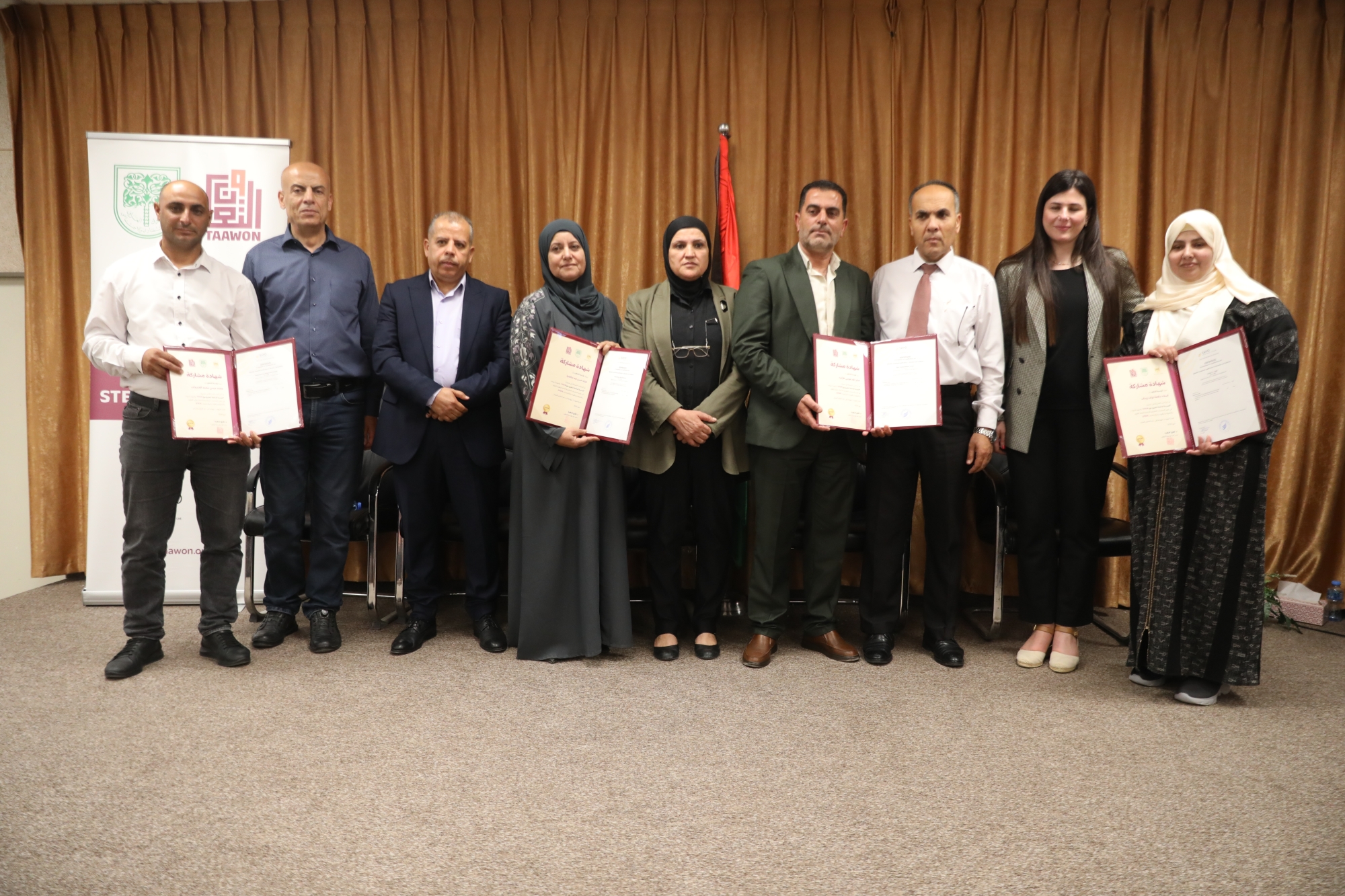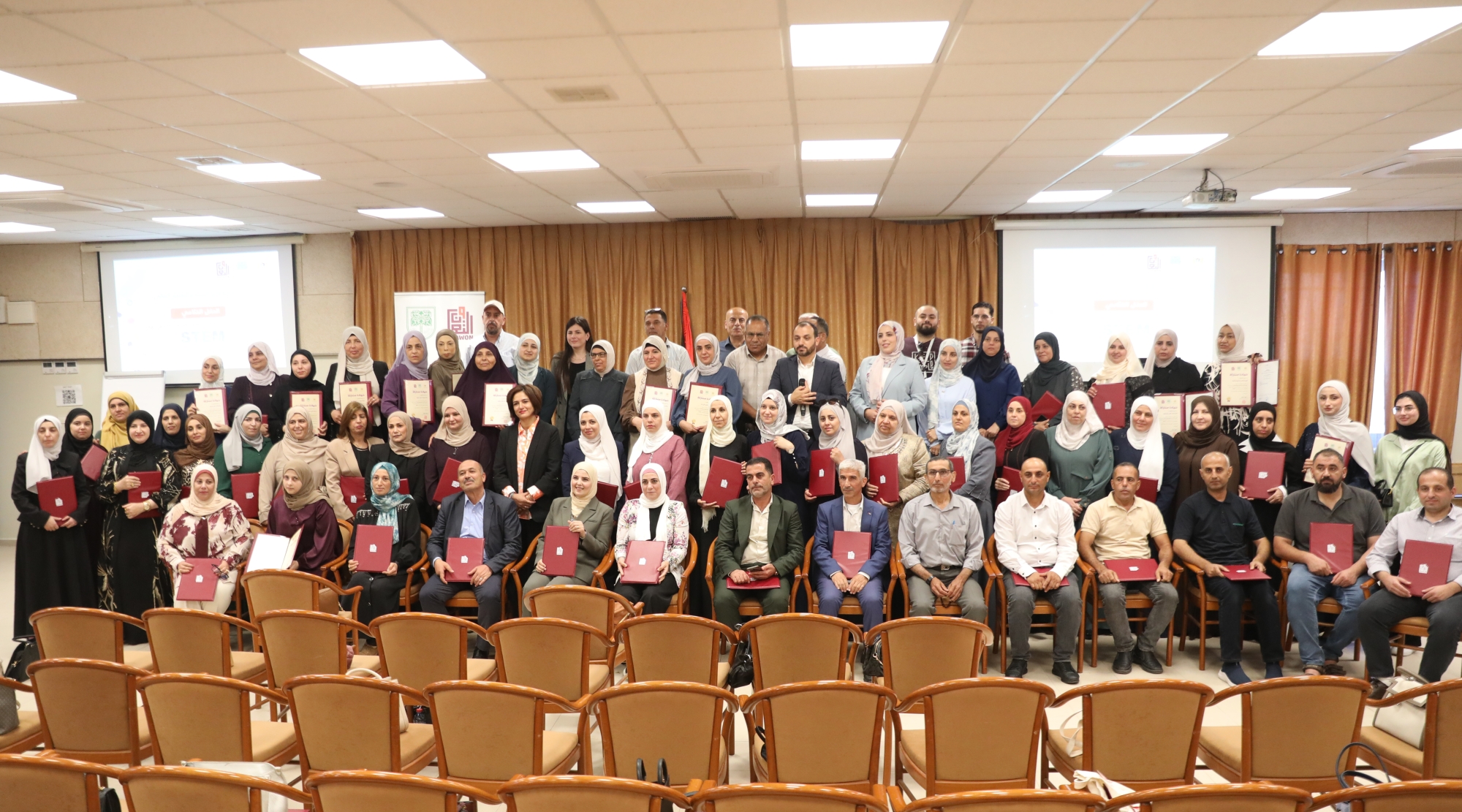
The Ministry of Education and Higher Education, alongside Taawon (Welfare Association), celebrated the conclusion of the "Enhancing Cadre Competencies for Adapting STEM Education in Palestinian Schools" project. Supported by the Arab Fund for Economic and Social Development and in cooperation with Omnia Education Partnerships, the closing ceremony was held at the National Institute for Educational Training, attended by participating schools, educational partners, teachers, and school principals.
This project marks the culmination of an effective partnership between the Ministry and Taawon, driven by the vision that investing in education is an investment in Palestine's future, and aiming to enable schools to adopt innovative educational models that help build a generation equipped with special skills in thinking and creativity, while enhancing their ability to tackle future challenges.
From his side, Mr. Mazen Jarrar, Director General of the National Institute for Educational Training, affirmed that the project embodies a promising model for an effective partnership in developing the educational environment, empowering schools and teachers to adopt modern educational practices that place the student at the center of the learning process. In turn, Dr. Suhair Qasim, Director General of Educational Supervision, praised the partnership with Taawon and explained that the project enhances critical thinking, creativity, collaborative work, and problem-solving, in line with the Ministry's approach toward comprehensively developing the educational system, while also commending the vital role played by teachers and school principals.
Furthermore, Mr. Naeem Abu Humda, Director of School Administrations at the Directorate Follow-up Unit, thanked the teachers and school principals for the important role they play amid the challenges and obstacles facing the educational process, emphasizing the importance of the training they receive in raising performance efficiency and supporting the STEM approach. Similarly, Ms. Kifah Zuhour, Director of West Bank Programs at Taawon, praised the outcomes of this program, describing the STEM approach as an integrated educational method that reshapes the teaching and learning mechanism interactively. She noted that it grants students the opportunity to question, explore, experiment, and work in a team spirit, while sparking their curiosity to investigate and reach convincing conclusions. She pointed out that today's achievement reflects the Palestinian school's capacity for development and innovation when effective partnerships and a supportive environment are present, reaffirming that investing in education is an investment in Palestine's future.
At the conclusion of the event, which was emceed by Dr. Iman Al-Najjar and Dr. Mohammad Khalil, the Ministry and Taawon honored the participating schools and educational leaders, valuing their efforts in making the project a success and stressing the need to continue building on this achievement and expanding opportunities for innovative education to develop a sustainable model for STEM education in Palestine.
Project Impact and Key Achievements
The core idea of the project revolves around developing the capabilities of school leaders and teachers to adopt an integrated approach to STEM education by promoting inquiry-based learning, linking knowledge with practical application, and creating stimulating learning environments that place the student at the center of the educational process.
The project actively contributed to 18 schools in the West Bank and Jerusalem receiving international accreditation as STEM schools, including six schools that achieved the advanced level of accreditation, while 35 principals and vice-principals obtained the international accreditation certificate qualifying them to lead the implementation of this approach within their schools. The project went beyond training and capacity building by upgrading school environments and providing 21 schools with devices, equipment, and educational furniture supporting the STEM approach to enhance hands-on learning, offering students spaces for more interactive and innovative learning experiences. The project also included an educational visit to Finland, where a number of educational leaders and Ministry representatives participated to learn about global experiences in education and explore ways to adapt modern educational practices to the Palestinian context.
The final evaluation results of the project demonstrated a tangible impact on educational practices within the schools, as the participation rate in the training programs reached 98.6%, while 91% of teachers confirmed that the program enhanced their knowledge and skills in applying the STEM approach inside classrooms. This success was positively reflected in student engagement, fostering their skills in critical thinking, teamwork, and problem-solving.